For most people when Assistive Tech is mentioned they think of having a laptop at school, or maybe a screenreader their workplace recommends – and whilst these are good things (and do help), when it comes to discernment and ministry work, well, we may need to dig a little deeper. For neurodivergent individuals—whether you have ADHD, Dyslexia, Autism, or Dyspraxia—the right tools can be the difference between merely surviving ministry and actually thriving in it.
I am someone who at work has sat at a desk 7 or 8 hours a day for the past 20 years, I get visual fatigue, I get visual disturbance, I struggle to organise, I struggle to make notes in meetings and honestly I know I’m not the only one. Over the years I’ve learnt what technology helps me, and I want to share those here – but I am also going to share other bits of software that others have recommended to me or friends, as there is no one-size fits-all.
Before we go on, its important to mention that if you are studying right now, it is important you raise your support needs with your college and/or DDO, advocating for yourself in this way (early) can ensure you reach your potential and are successful in ministry.
Field Note: As Your Ministry Evolves…
The tools will need to shift as your ministry evolves. What helps your process discernment paperwork may not work for theological reading, and what helps you to organise your college work is unlikely to help you organise day-to-day life as a parish minister. Being aware of this need changing can help inform what you need here and now.
Assistive Technology for Reading & Digesting Dense Information
Theological training and parish ministry both require absorbing massive amounts of text, from academic theology to dense safeguarding policies. This is often the primary barrier for dyslexic and ADHD brains.
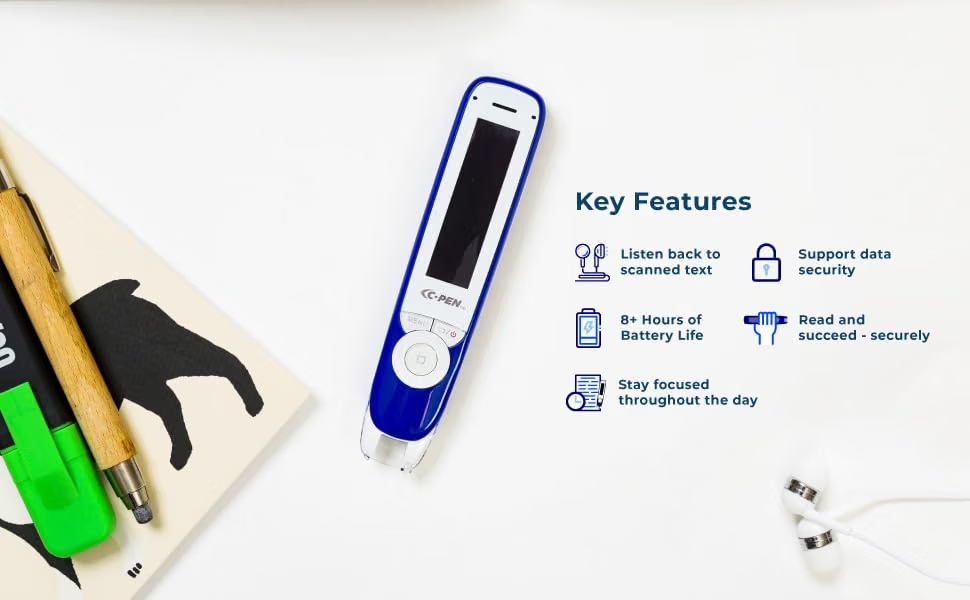
C-Pen Reader
-
Scanning Pens (e.g. C-Pen Reader): Essential for physical books in theological libraries that aren’t available digitally. Highlighting a physical line of text and having it read aloud instantly bypasses the visual strain of dense, small-print typography.
-
Text-to-Speech (TTS) & Audio Integration: Tools like Speechify or Read&Write allow you to listen to PDFs, web pages and documents while reading along. For a screen-free approach, formatting long documents into audio files to listen to while walking the dog can drastically improve retention.
-
E-Ink Devices (e.g. reMarkable Paper Pro): Reading on a standard tablet or laptop invites notification distractions and causes eye fatigue. High-resolution e-ink displays provide a paper-like reading experience for PDFs, allowing you to highlight and annotate without the glare of a backlit screen.
Assistive Tech for Drafting, Writing and Reflections
Getting thoughts out of the brain and onto the page is a well-known bottleneck, particularly during the discernment process and essay-writing phases.
-
Mind-Mapping (e.g. MindView, Inspiration): Instead of writing a linear outline, mind maps allow neurodivergent brains to visually connect theological themes or structural points for a sermon, moving ideas around spatially before committing to a draft.
-
Dictation & Transcription (e.g. Otter.ai, Built-in OS Dictation): Staring at a blank document can trigger paralysis. Walking around the room and speaking thoughts aloud—then using the transcription as a rough first draft—bypasses the pressure of typing perfectly.
-
Distraction-Free Drafting: Using full-screen, minimalist writing environments on a MacBook or utilising an e-ink tablet (such as reMarkable mentioned earlier) for initial handwritten drafts prevents the urge to endlessly edit or check a web browser while writing.
Technology for Managing Time, Organising Tasks & More
Ministry can be notoriously unstructured. The shift from a rigid timetable to setting your own schedule can wreak havoc on executive function.
-
Smart Time-Blocking Calendars (Reclaim.ai, Motion): Traditional calendars rely on the user to accurately estimate time. AI-driven calendars automatically block out travel time, protect days off, and schedule “deep work” (like sermon prep) around fixed meetings.
-
Micro-Task Managers (Todoist, TickTick): Large projects like “Organise the Christmas Fayre” can cause task paralysis. A good task manager allows you to create reusable templates that break massive projects down into manageable micro-steps.
-
Visual Focus Timers (Forest): A gamified Pomodoro timer that grows a digital forest while you work. It provides a visual representation of time passing gives you breathing exercises and keeps you anchored to the task at hand.
Assistive Technology for Preaching & Public Worship
Leading a service carries a high cognitive and sensory load. The goal of tech here is to reduce the risk of losing your place and to manage the physical environment.
-
Tablet Preaching & Dark Mode: Preaching from paper can be stressful (dropping pages, losing your place). Preaching from a tablet allows you to use dyslexic-friendly fonts (like OpenDyslexic or Arial), increase text size, and use Dark Mode (white text on a black background) to eliminate page glare under bright church lights.
-
Ecosystem Continuity: Having a reliable smartphone (like a Google Pixel or Samsung Galaxy) synced with your primary laptop or tablet ensures that if one device fails or is left on the vicarage desk, your sermon notes and service sheets are immediately accessible in your pocket.
-
Automated Boundaries (Focus Modes/Routines): Managing the “always on” expectation. Programming devices to automatically silence parish emails and WhatsApp groups on your day off protects your sensory and emotional bandwidth.
Featured Image of C-Pen in use, from Amazon.
NDMuk are a part of the Amazon Affiliate Scheme, this means if you purchase a product using our links we may receive a small commission. This does NOT cost you anything. By buying through our links you truly support our work at NDMuk.


0 Comments