Most people assume the hardest part of discernment is the soul-searching. When you tell friends, family, or people in your congregation that you are exploring a call to ministry, they immediately picture a very specific, highly romanticised version of events. They imagine you retreating to quiet, stone-walled chapels, spending hours in deep, unbroken prayer, and engaging in intense, philosophical wrestling matches with the Divine. They assume the greatest hurdles are theological questions, sudden crises of faith, or a deep sense of spiritual unworthiness.
While all of that is certainly a part of the journey, and the spiritual gravity of the process is undeniable, the reality on the ground looks drastically different. For me, the biggest barrier wasn’t a complicated theological quandary or a sudden doubt about my faith. It was the physical, sensory, and administrative challenge of the Church’s bureaucratic machinery. And, surprisingly enough, it was the physical artifact of the Bible itself.
I am someone who can comfortably handle complex workloads. I can manage high-stakes emails, I can build strategies, and I am more than prepared to pour my heart onto the page when asked to reflect on my calling. But the administrative chaos that comes attached to structures like the Shared Discernment Process introduces a unique, unrelenting kind of stress for my neurodivergent brain.
The Church operates on a timeline and a structural framework built centuries before we understood anything about ADHD, dyslexia, or neurodiversity. When you step into that framework with a brain wired differently, the friction is immediate.

The Bureaucratic Maze
To understand why the process is so difficult, you have to understand how an ADHD brain processes tasks, expectations, and time. The Shared Discernment Process is heavily administrative. It involves massive forms, endless criteria, and a seemingly infinite chain of communication. Here is how that plays out in my mind.
The Wait
I get intensely stressed about waiting for responses. The dopamine loop of an ADHD brain craves immediate feedback, clear loops of completion, and closed tasks. We function best when an action results in a reaction.
In stark contrast, the slow, deliberate, and often glacial pace of the Church can feel like psychological torture. When you fill out a form containing your deepest, most vulnerable spiritual reflections, you click 'send' and immediately brace for a response. But the response rarely comes quickly. The Church operates on a different temporal plane. Days turn into weeks, and sometimes weeks bleed into months as paperwork slowly winds its way through diocesan offices, panel reviews, and administrative backlogs.
Without immediate feedback, my brain panics. In the silence, it begins to invent narratives. It assumes the absolute worst: that my application has been lost in an inbox, that I accidentally said something entirely heretical, or that the silence is a polite way of communicating that I am fundamentally unsuited for ministry. The administrative engine of the Church requires a type of patient, passive waiting that feels entirely detached from modern neurological realities.
The Ambiguity
I get paralysed by anxiety over ambiguous questions. Discernment paperwork is notoriously laden with open-ended, highly psychological prompts. They are designed to be broad so that candidates can interpret them freely and reveal their true character.
But for a neurodivergent mind that often defaults to literal interpretation, or one that desperately seeks clear parameters to feel safe, this ambiguity is terrifying. A prompt asking me to "Reflect on a time your faith was challenged" doesn't feel like an invitation to write; it feels like a trap. Which time? Challenged how? Do they mean an intellectual challenge or an emotional one? How vulnerable am I supposed to be? Is there a hidden criteria I am failing to meet?
This leads me to draft, delete, rewrite, and clarify things over and over again. I find myself caught in exhausting loops of over-analysis, terrified of accidentally giving the “wrong” answer. Every prompt feels like a minefield where a single, poorly chosen word might disqualify me from a calling I have spent years trying to understand.
The Feedback Loop
I get grumpy and deeply unsettled when I can’t immediately read someone’s facial expressions, micro-expressions, or thoughts about what I’ve just written.
When you have poured your entire heart, soul, and lived experience into a piece of written self-reflection, handing it over to a panel or a Diocesan Director of Ordinands creates an agonizing asymmetry. You are completely exposed on the page, sitting there bare for committee review, yet you receive no immediate mirroring or validation. In a face-to-face conversation, my brain relies heavily on real-time feedback—a nod, a smile, a shift in tone—to gauge if I am making sense and if I am safe. Navigating the black box of institutional evaluation strips all of that away, requiring a level of emotional regulation that exhausts every ounce of my daily energetic reserve.

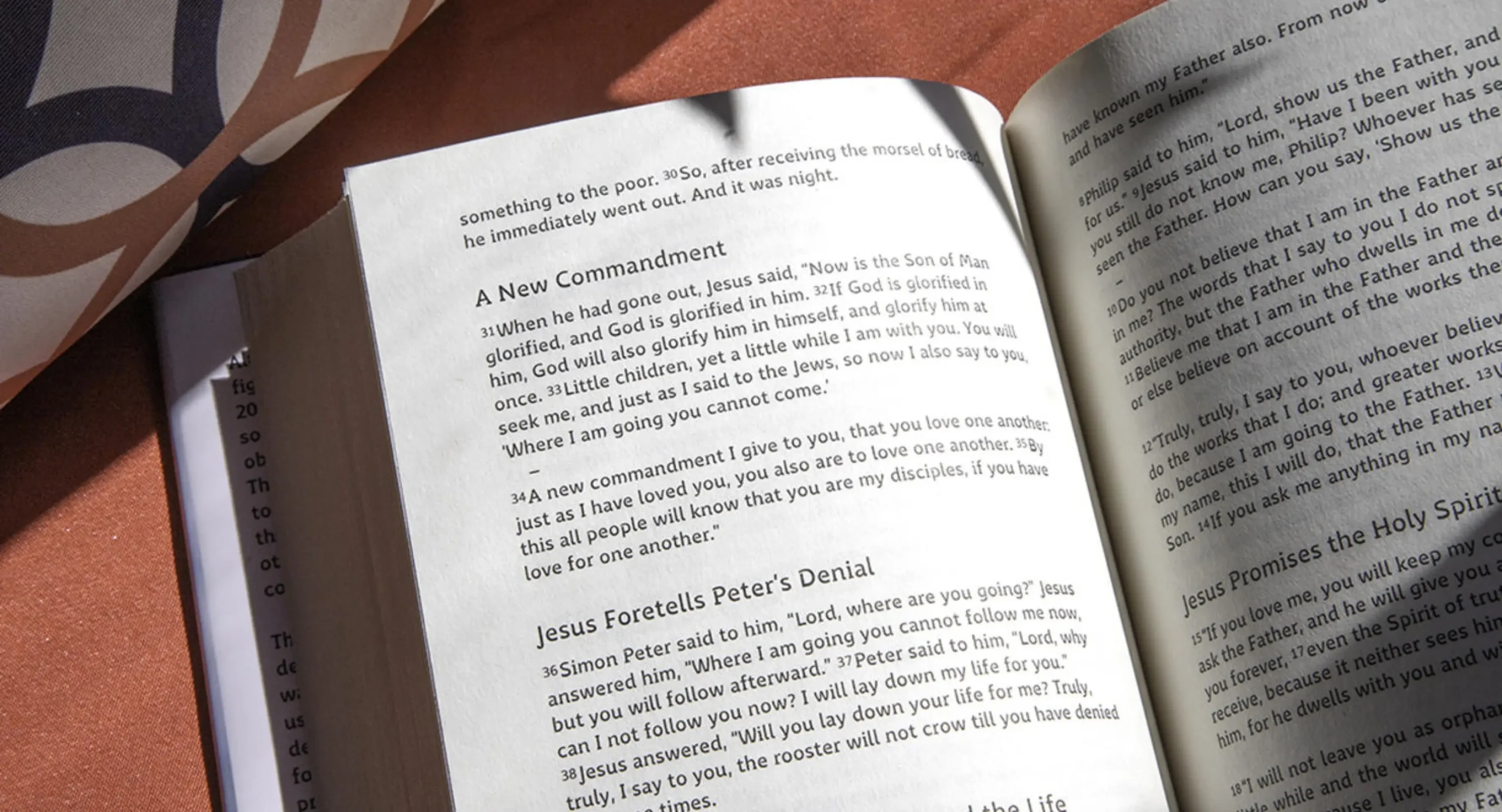
Times New Roman font - a struggle for dyslexia
The Encounter with the Word
The absolute first moment I genuinely thought, “Uh oh, my brain is going to make this difficult,” wasn’t when I finally worked up the courage to contact my vicar. It was long before that. It was every single time I tried to sit down and engage with Scripture.
We talk endlessly in church circles about spiritual disciplines, the daily office, and the absolute necessity of soaking oneself in the Word of God. We talk about it as if it is a neutral, universally accessible practice, entirely ignoring the physical reality of the object we are asking people to use. For millions of neurodivergent people, the physical artifact of the book itself is a formidable gatekeeper.
Tiny Text and the Problem with Times New Roman
I have struggled to read the physical Bible for years because it almost invariably comes packaged in a traditional Serif font. Think of typefaces like Times New Roman, Garamond, or Minion—the ones with the little decorative feet and varying line thicknesses. Combine that with the fact that Bible publishers seem to treat printing as a competition to see how many millions of words they can cram onto a single page, and you have a recipe for total inaccessibility.
For my dyslexic brain, this combination of tiny Serif type and thin paper is one of my biggest hurdles, and one I fight daily. It is a relentless, exhausting visual battle. When I open a traditional pew Bible or a standard personal copy, it feels like my eyes are constantly fighting against the grain of the page. The letters refuse to stay still.
Because the pages are so thin—often referred to as onion-skin or Bible paper—the text from the reverse side bleeds through, creating a shadow behind the words I am trying to read. The letters experience non-stop ghosting, swimming across the lines, and jumping randomly around the page. The spacing between words can sometimes form "rivers" of white space that my eyes get lost in, pulling my focus down the page instead of across the sentence.
What should be a peaceful, contemplative act quickly transforms into a high-stakes visual obstacle course. By the time I have decoded the text, forced my eyes to track a single paragraph, and fought past the visual noise, my cognitive energy is completely depleted. The spiritual nourishment of the passage is utterly eclipsed by the sheer physical labour of decoding the ink.
Tip for Neurodivergents: I recently discovered the ESV Crystal Bible, it feels like a much more accessible bible (at least for me). You can read about it in my Review of the Crystal Bible.
Finding a Way Forward Through Technology
While I eventually upgraded to a physical Bible with a significantly bigger, better font, the struggle is still very much real. It is still stubbornly a Serif type, and the physical layout still demands an incredible amount of mental processing power.
Physical layout matters. Today, I rely heavily on digital versions of the Bible for my daily reading. I only refer to my physical copy when I am intensely studying, cross-referencing, or writing a sermon, where the spatial structure and the geographic context of the physical book are genuinely necessary for my workflow.
Digital tools have been the true enabler for my spiritual life and my discernment journey. Reading scripture on an e-ink display—like my reMarkable Paper Pro—has entirely changed how I interact with theology. The lack of screen glare, combined with the ability to load up texts in clean, large, sans-serif fonts, removes the visual friction that standard books force upon me. It allows me to actually process the meaning of the words rather than fighting the typography.
Tip for Neurodivergent Readers: Use BibleGateway.com for your daily reading. It utilises a clean, highly readable sans-serif font by default. Just under the search bar, there is a simple dropdown menu allowing you to change the font size, line spacing, and typeface. It also removes the visual distraction of double-column layouts. This minor digital adjustment transforms scripture engagement from an inaccessible chore into an accessible joy.
Getting Past the Barrier Through Honesty
This early panic—realising that the foundational text of my faith was physically hostile to how my brain processes visual data—forced me to confront a broader, uncomfortable truth about the Church. We often assume that spiritual callings are pure matters of the heart and spirit, completely untethered from our physical, sensory, and neurological wiring. The unspoken assumption is that if you have enough faith, or if your calling is genuine, you will naturally be able to push through any administrative or physical obstacle.
Yet, institutional structures and historical traditions are built with a very specific, neurotypical body in mind. They assume everyone can effortlessly parse dense paragraphs of 8-point serif text. They assume everyone can navigate labyrinthine application portals without experiencing total sensory and cognitive overload. They assume everyone thrives under conditions of deliberate, ambiguous delay. When you do not fit that narrow mould, every single step feels like an act of structural friction. You begin to question whether your difficulties are a sign that you are mishearing God’s call, or simply evidence that the system was never designed to hold people like you.
I got past this initial hurdle by doing the only thing that actually works: I spoke to my rector openly, vulnerably, and brutally honestly about those exact challenges.
I did not try to mask my difficulties. I didn't pretend that I could easily digest dense theological compendiums in tiny print, nor did I hide the fact that the administrative ambiguity makes me spiral into anxiety. I laid all my cards on the table. I told them about the dyslexia, the ADHD, the sensory friction of traditional texts, and the sheer terror of the bureaucratic vacuum of the Shared Discernment Process.
This initial act of vulnerability was the true first step in my discernment. It broke the illusion that I needed to present a "perfect, untroubled candidate" facade. It demonstrated immediately that the only way forward through a rigid, historic institution is to be unapologetically clear about the kind of support, accommodations, and structural adjustments my brain needs if I am to effectively serve the Church.
If you are neurodivergent and standing on the threshold of discernment—whether you are exploring ordained ministry, stepping into lay leadership, or simply trying to find a sustainable rhythm of spiritual devotion—your struggles are valid. If the standard application forms make you want to throw your laptop out the window, you are not failing at faith. If traditional Bibles give you a migraine and make the words dance across the page, you are not lacking in discipline. You are simply navigating a world that was built for a different cognitive operating system.
The Church desperately needs neurodivergent voices, divergent thinkers, and those who experience the world differently. But claiming that space requires us to stop punishing ourselves for our accommodation needs. It requires us to lean into digital tools, demand accessible formats, and speak our truths out loud to the people walking alongside us on the journey.



0 Comments